Life in La Conner feels delightfully different from life in a larger city. Located beside the Swinomish Channel in western Skagit County, this historic waterfront town offers a relaxed pace, a lively arts scene, locally owned businesses, and easy access to some of Northwest Washington’s most beautiful landscapes.
La Conner may be compact—the town covers approximately half a square mile—but it offers an impressive collection of restaurants, galleries, museums, boutiques, waterfront viewpoints, and community events. Downtown is wonderfully walkable, making it possible to browse art, enjoy a cup of coffee, shop for a locally made gift, and have lunch overlooking the channel without moving your car.
As a local real estate agent, I love introducing people to communities that have a genuine genuine sense of place, and La Conner certainly fits that description. Its history, waterfront setting, agricultural surroundings, and creative personality come together in a way that feels truly special.
Whether you are planning a visit, researching Skagit County communities, or considering a future real estate move, Living in La Conner, Washington: Art, Waterfront Beauty, and Small-Town Charm offers a closer look at what makes this picturesque town so memorable.
A Historic Waterfront Community
La Conner’s story stretches back to the 1800s. The settlement was initially known by its post office name, Swinomish, and its location along the Swinomish Channel made it a valuable harbor for vessels traveling through the region.
J.S. Conner purchased the community’s trading post in 1869. The settlement was renamed La Conner in 1870 to honor his wife, Louisa Ann Conner. The French-looking “La” came from her first and middle initials.
When Skagit County was created from Whatcom County in 1883, La Conner briefly served as the county seat. That designation moved to Mount Vernon in 1884, but La Conner continued developing as a commercial, agricultural, and maritime community.
Today, the downtown area retains much of its historic atmosphere. The central portion of town, roughly bounded by Second Street, Morris Street, Commercial Street, and the Swinomish Channel, is a historic district listed on the National Register of Historic Places.
Historic buildings, waterfront walkways, mature landscaping, and locally operated businesses give downtown La Conner an inviting character. It feels like a place where history remains visible while the community continues to evolve.
A Celebrated Northwest Arts Destination
La Conner has earned a lasting reputation as one of Northwest Washington’s most distinctive arts destinations. Artists have long been inspired by the Skagit Valley’s fields, waterways, mountains, wildlife, and changing seasonal light.
The town’s compact downtown district makes exploring its creative side especially easy. Galleries and cultural spaces are located within a relatively short distance of one another, allowing visitors to create their own self-guided art walk.
Depending on the current exhibitions, visitors may encounter:
- Northwest landscape paintings
- Contemporary art
- Photography
- Sculpture
- Glasswork
- Ceramics
- Jewelry
- Textile art
- Mixed-media pieces
- Locally inspired gifts
The artwork often reflects the surrounding region. Tulip fields, historic barns, shorebirds, fishing vessels, the Swinomish Channel, Mount Baker, and Skagit Valley farmland frequently appear as subjects.
Supporting a local gallery or purchasing work directly from an artist is a meaningful way to participate in La Conner’s creative culture. It also provides an opportunity to bring home something connected to the landscape and character of the community.
The Museum of Northwest Art
The Museum of Northwest Art, often called MoNA, is one of downtown La Conner’s cultural anchors. The museum focuses on art connected to the Pacific Northwest and presents exhibitions, educational programming, and special events.
Exhibitions may feature established artists, emerging voices, historical work, or contemporary interpretations of Northwest life and landscapes. Because displays change, repeat visits can offer entirely different experiences.
The museum also helps connect La Conner’s local creative community with the broader artistic history of the Pacific Northwest. It is a wonderful stop for anyone interested in understanding how regional landscapes, cultures, materials, and ideas have influenced generations of artists.
A museum visit is easy to pair with downtown shopping, lunch, coffee, or a waterfront walk. That convenience is one of the joys of spending time in La Conner: culture, dining, history, and scenery all fit into a relaxed day of exploration.
Waterfront Recreation Along the Swinomish Channel
The Swinomish Channel is central to La Conner’s identity. It separates the town from the Swinomish Indian Reservation on Fidalgo Island and provides a scenic route connecting Skagit Bay with waters farther north.
Throughout the day, visitors may see fishing boats, pleasure vessels, kayaks, working marine traffic, and wildlife moving along the channel. Waterfront walkways and dining areas make it easy to pause and enjoy the view.
Popular water-oriented activities may include:
- Boating
- Kayaking
- Fishing where permitted
- Wildlife watching
- Waterfront photography
- Walking beside the channel
- Dining with water views
Anyone planning to boat, paddle, or fish should research current tides, weather, marine traffic, launch access, licensing requirements, and safety regulations. Conditions can change quickly, and the Swinomish Channel remains an active navigation route.
Even if you never step onto a boat, the channel is an important part of everyday life in La Conner. Its movement, reflections, and changing scenery create a beautiful backdrop for the town.
The Rainbow Bridge and the Swinomish Indian Reservation
One of La Conner’s most recognizable landmarks is the Rainbow Bridge. The steel arch bridge crosses the Swinomish Channel, connecting La Conner with the Swinomish Indian Reservation on Fidalgo Island.
The bridge is both a practical transportation connection and a colorful part of the local landscape. It provides access toward Shelter Bay, other reservation communities, and routes leading toward Anacortes.
The Swinomish Indian Tribal Community is a federally recognized tribal community with a distinct government, history, culture, and jurisdiction. Visitors and real estate consumers should understand that the reservation is not simply another La Conner neighborhood, even though properties may use La Conner mailing addresses.
That distinction becomes especially important when researching real estate, utilities, land ownership, permitting, and community governance.
Shelter Bay and Leased Tribal Land
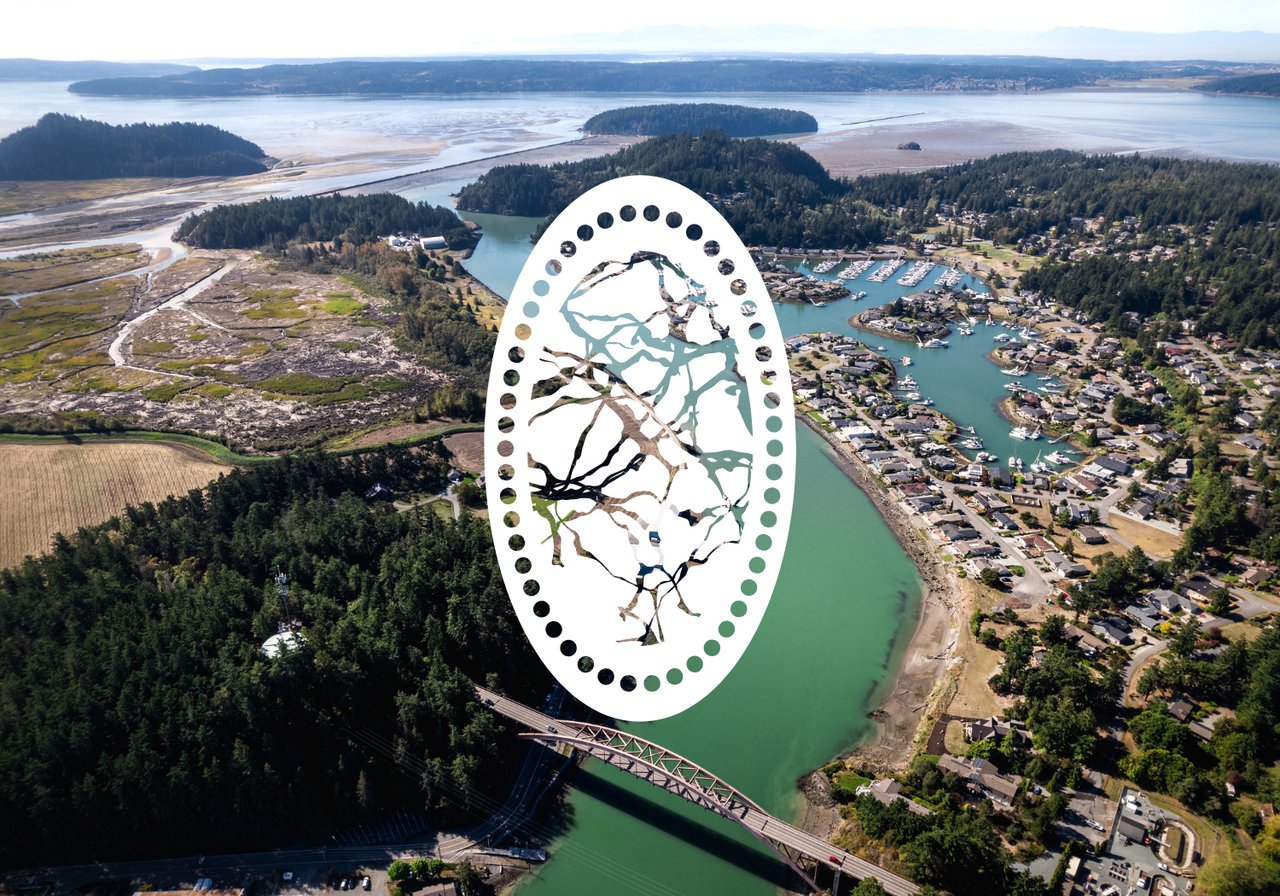
Shelter Bay is a residential community located across the Rainbow Bridge on the Swinomish Indian Reservation. Although Shelter Bay properties commonly have La Conner mailing addresses, the community is outside the incorporated Town of La Conner.
Most residential properties in Shelter Bay are on land leased from the Swinomish Indian Tribal Community rather than conventional fee-simple land. In a typical leasehold transaction, the purchaser acquires the home and improvements along with the right to occupy the underlying lot under a sublease. The land itself is not purchased.
A smaller number of Shelter Bay properties are fee simple, so buyers should never assume the ownership structure based only on the address or neighborhood name.
Leasehold ownership can affect:
- Financing options
- Loan amortization periods
- Monthly or annual ownership expenses
- Resale considerations
- Long-term planning
- Lease-payment adjustments
- Title and disclosure review
- Closing timelines
Shelter Bay also has community assessments supporting infrastructure, operations, amenities, roads, utilities, reserves, and shared facilities. Buyers should carefully review the current lease, sublease, association documents, assessments, budgets, and community rules with qualified professionals.
Shelter Bay may offer amenities such as marina access, golf, parks, athletic courts, community facilities, water, sewer, and maintained infrastructure. Availability, fees, eligibility, and rules should always be confirmed directly through current community documents.
Leasehold property is not inherently good or bad—it is simply a different ownership structure that requires informed evaluation. Buyers should work with a real estate agent and lender familiar with Shelter Bay and leased tribal land.
Seasonal Flowers and the Skagit Valley Tulip Festival
La Conner sits at the edge of the Skagit Valley’s celebrated agricultural landscape. During spring, nearby fields burst into color as daffodils and tulips begin blooming.
The Skagit Valley Tulip Festival traditionally takes place during April, although actual bloom timing depends on weather. Some seasons begin earlier in March, while others continue into May.
Tulip season brings:
- Display gardens
- Colorful commercial fields
- Art exhibits
- Scenic driving routes
- Photography opportunities
- Seasonal markets
- Local dining experiences
- Activities throughout Skagit County
La Conner is a popular place to visit during the festival because of its proximity to the fields and its concentration of restaurants, shops, galleries, and waterfront scenery.
Spring visitors should prepare for additional traffic, particularly on sunny weekends. Tulip fields are working agricultural properties, and their locations may rotate. Visitors should use current festival maps, park only in approved areas, remain on designated paths, and never enter private fields without authorization.
The La Conner Daffodil Festival
Before the tulips reach their peak, daffodils often bring the first major burst of spring color to the Skagit Valley. The La Conner Daffodil Festival celebrates this earlier bloom with seasonal activities and opportunities to explore the surrounding countryside.
The timing of the flowers varies from year to year, so checking current bloom conditions is essential. Early spring weather can also be unpredictable, making waterproof footwear and layered clothing excellent additions to any outing.
The daffodil season can be a cheerful time to visit La Conner. The town begins waking up from winter, galleries introduce new work, restaurants welcome spring visitors, and nearby fields provide a bright preview of the growing season ahead.
Dining in La Conner
For a small town, La Conner offers an impressive variety of dining experiences. Visitors can enjoy meals beside the Swinomish Channel, grab coffee while exploring downtown, or relax over food and conversation after visiting galleries.
Local offerings may include:
- Waterfront restaurants
- Seafood
- Northwest-inspired cuisine
- Casual cafés
- Bakeries
- Coffee shops
- Wine tasting
- Sweet treats
- Seasonal menus
Restaurant hours can vary by season, and popular locations may become busy during tulip season, festivals, and summer weekends. Calling ahead or making a reservation can help, especially when planning around an event.
The walkable downtown layout makes it easy to combine dining with shopping and sightseeing. You can enjoy breakfast, browse several boutiques, visit the museum, walk beside the channel, and settle in for dinner—all within a relatively compact area.
Boutique Shopping and Locally Owned Businesses
La Conner’s locally owned shops are another important part of its charm. Downtown storefronts may feature clothing, home décor, books, antiques, specialty foods, handcrafted goods, garden-inspired products, and work by regional artists.
Shopping locally supports the independent businesses that give La Conner its distinctive personality. Instead of encountering the same stores found in every larger commercial area, visitors can discover unusual pieces and products selected with care.
A leisurely afternoon might include:
- Browsing an art gallery
- Visiting an independent boutique
- Looking for home décor
- Purchasing local artwork
- Enjoying coffee or lunch
- Exploring historic buildings
- Walking along the waterfront
- Photographing the Rainbow Bridge
Business hours may change seasonally, so visitors planning to see a particular shop should confirm its schedule in advance.
Living in La Conner, Washington: Art, Waterfront Beauty, and Small-Town Charm
Beyond its galleries and waterfront restaurants, La Conner offers convenient access to destinations throughout Skagit and Island Counties.
Nearby communities include:
- Mount Vernon
- Burlington
- Anacortes
- Sedro-Woolley
- Conway
- Bow and Edison
- Whidbey Island communities
State Route 20 provides regional connections toward Interstate 5, Anacortes, Fidalgo Island, Whidbey Island, and the North Cascades. Local roads lead through farmland and agricultural areas surrounding town.
Because La Conner is bordered by waterways, farmland, tribal land, and unincorporated county areas, buyers should pay attention to a property’s actual jurisdiction. A La Conner mailing address does not necessarily mean the home is located within the incorporated town.
Jurisdiction can affect:
- Water and sewer service
- Building permits
- Land-use regulations
- Property taxes
- Road maintenance
- Emergency services
- Short-term rental rules
- Shoreline requirements
- Flood-zone considerations
Understanding these distinctions is an important part of making an informed real estate decision.
To read more about what it's like living in La Conner, Washington; click the link below:
Neighborhood || La Conner
La Conner Real Estate and Housing Options
La Conner-area real estate offers a fascinating mixture of property types. Depending on location, buyers may encounter:
- Historic homes near downtown
- Craftsman-inspired residences
- Waterfront and water-view properties
- Condominiums
- Established neighborhood homes
- Rural acreage
- Farmhouses
- Custom homes
- Shelter Bay leasehold properties
- A limited number of fee-simple Shelter Bay properties
Historic homes may offer charming architecture, covered porches, original woodwork, and walkability. They may also require additional investigation of foundations, wiring, plumbing, insulation, drainage, roofing, and previous renovations.
Waterfront and water-view buyers should verify shoreline rights, tideland ownership, flood exposure, drainage, bluff conditions, and insurance availability. A water view does not automatically include legal beach or boating access.
Rural buyers should investigate wells, septic systems, private roads, zoning, wetlands, agricultural activity, and development restrictions. Living near active farmland may include seasonal equipment, dust, odors, and early-morning operations.
Every property should be evaluated individually rather than compared only by mailing address.
Why La Conner Leaves a Lasting Impression
People are drawn to La Conner for many property-specific and lifestyle-related reasons. Some appreciate its walkable downtown and artistic energy. Others enjoy the waterfront scenery, local restaurants, historic architecture, or proximity to Skagit Valley farmland.
Frequently appreciated features include:
- A compact historic downtown
- Local art and museums
- Waterfront scenery
- Independent shops
- Community events
- Regional dining
- Access to outdoor recreation
- Proximity to surrounding communities
- Distinctive architecture
- Agricultural landscapes
La Conner feels connected without feeling overly urban. It provides modern conveniences and regional access while maintaining a strong relationship with local history, art, water, and agriculture.
Living in La Conner, Washington: Art, Waterfront Beauty, and Small-Town Charm
Living in La Conner, Washington: Art, Waterfront Beauty, and Small-Town Charm is ultimately about discovering a community with an identity all its own.
You can begin the morning with coffee downtown, browse regional artwork, watch boats travel through the Swinomish Channel, have lunch beside the water, and end the afternoon driving past Skagit Valley farmland. Throughout the year, seasonal blooms, exhibitions, festivals, and changing waterfront scenery give residents and visitors new reasons to explore.
If you are considering buying or selling real estate in La Conner, Shelter Bay, or surrounding Skagit County communities, knowledgeable local guidance is especially valuable. Historic properties, waterfront homes, rural land, reservation jurisdiction, and leasehold ownership each involve different questions.
Lapis Homes | Anacortes, WA Real Estate Agents | Home Search
The team at Lapis Homes is here to help you understand those differences and navigate your next move with confidence. Our local expertise and personalized service make exploring the La Conner real estate market informative, approachable, and enjoyable.
Contact Lapis Homes today at (360) 997-1042 or [email protected]—we would love to connect with you!